
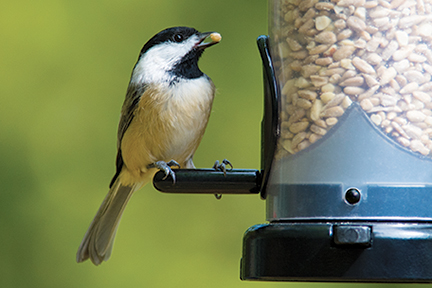
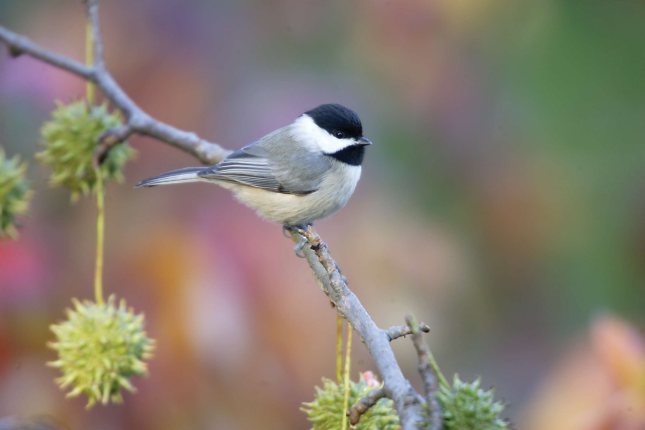
Black-capped Chick-a dee dee dee dee dee...!
Hello Bird Friends,
We have a lot of fun events planned for April. Join us for a bird outing or in-store presentation where we share tips, insights, and stories, and you’ve got everything you need to tune in, head outside, and bring the world of birds a little closer to home. Spring is the season of sound and discovery when bird song fills the air and a walk outdoors becomes an opportunity to connect with nature. What we hear in our backyards each day is a language shaped by survival. From melodic songs at sunrise to sharp alarm calls in the shrubs, each sound serves a purpose. Understanding these vocalizations adds a deeper layer to bird watching and reveals just how connected birds are to their environment.
Birds vocalizations consist of calls and songs. Bird “songs” are typically longer, more complex, and most often sung by males during the breeding season. Their primary roles are attracting mates and defending territory. In contrast, “calls” are shorter, simpler sounds used year-round by both males and females. Calls entail communication from everything from danger to location and help birds stay connected with mates, flock members, and family.
Sunrise in spring is known as the dawn chorus. This mash up of bird song is driven by males announcing their presence and fitness. A strong song tells rivals to keep their distance and signals to females the singer is healthy and capable. Species like the Northern Mockingbird may sing through the night, repeating phrases to stand out, while birds like the American Robin deliver cheerful, melodic songs from their perches.
When danger appears, birds switch to sharp, urgent calls known as alarm calls. Think of these alarm calls as the sounds of survival. Alarm calls can vary depending on the threat, some warn of aerial predators, while others signal ground danger. Chickadees are famous for their familiar “chick-a-dee-dee-dee” call adding more “dees” as the threat level increases. This system helps nearby birds react quickly where they can often be viewed freezing in place or diving for cover.
Another type of call is a contact call. Think of this is a Marco-Polo (call-and-response) check in. Birds constantly check in with one another using soft contact calls. These simple sounds help pairs stay together, keep flocks organized, and allow parents and fledglings to remain in touch. You’ll often hear these subtle notes at feeders or while birds move through trees together. Going into nesting and baby bird season you may hear the "begging calls" of nestlings and fledglings. Young birds are noisy. These kiddos use high-pitched begging calls to signal hunger, prompting parents to deliver food. While these calls are essential for getting their needs met, they can also attract predators, making timing and nest location critical.
Many birds give specific calls while in flight, especially during migration or when moving in groups. These flight & flock call sounds help maintain flock cohesion and coordinate movement. Listen for the steady chips and peeps overhead during migration, especially at night. Bird vocalizations are more than beautiful. They are vital tools for survival. Through sound, birds defend territory, find mates, warn of danger, and raise their young. By learning to recognize these calls and songs, we not only become better birders, but we also gain a deeper appreciation for the complex and fascinating lives of the birds around us.
In-Store Happenings & Events
Nesting SuperBlend has arrived! You've been asking and its here! Be a seasonally savvy bird feeder by providing the birds a super-boost of protein and calcium for birds nesting & molting needs. The need for protein and calcium substantially increases for birds during periods of egg-laying. Protein is crucial for muscle and feather development in young birds.
Bincocular Sale
Now through the end of April save on $200 ZEISS SFLs and 10% off in-store Vortex binoculars.
Bird Watching Outing this Saturday!
Join WBU staff members Ean Carris and PD StClair this Saturday, April 4 from 8am - 10am for a fun outing at Tingley Beach. Meet at the Tugboat near Model Boat Pond. Bring binoculars if you have them. If you don't, stop by the store. We have something in every price range.
National Draw a Bird Day is April 8
You don't have to be an artist, take some time to enjoy the birds in your backyard and try to draw one! Share your creations with us, we love to see them. This special day started as a simple, heartfelt way to bring joy through art and it’s grown into a celebration of creativity and our love for birds. Share with us by bringing them into the store or posting on our social media. We give out crayons and bird coloring sheets to kids of all ages who visit, and we proudly display the artwork they bring back or leave with us.
All About Bats with Justin "Batman" Stevenson
Join us for a fun and fascinating program about New Mexico’s native bats, featuring expert insights from wildlife biologist, Justin Stevenson, of RD Wildlife Management. Justin's presentation on the bats of New Mexico will include incredible infrared videos and photographs taken during field work and conservation projects, showcasing some of the 29 species who call this state home.
- Saturday, April 11, 11am to Noon | No registration required
Hummingbird Presentation with Josiah Lavender
Join us to learn about these fascinating creatures and discover how to attract them to your backyard. Our guest speaker is Josiah Lavender, a PhD student in Biology at the UNM where he studies the evolution of reproductive timing in songbirds.
- Saturday, April 25, 11:00am – 1:00pm | No registration required
We hope you enjoy our offerings and visit us soon.
Happy day,
PD StClair, Team Member at WBU Albuquerque Eastside