
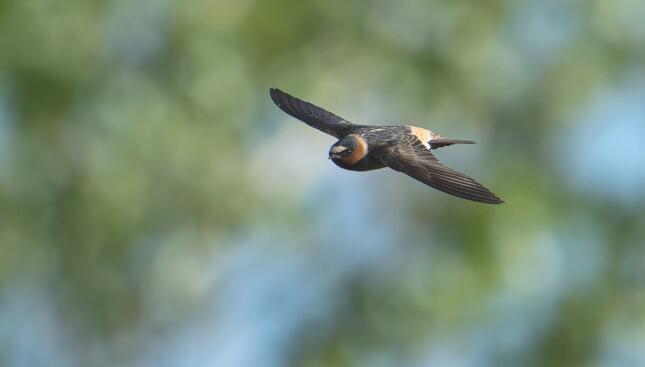
Cliff Swallow photographed by John Wright at Alameda St Bridge in ABQ
May Wings
Hello Bird Friends,
Spring is an exciting time to notice birds, as migration is in full swing and species that spent the winter farther south begin returning. Whether you’re new to bird watching or have enjoyed it for years, May is full of activity and offers the perfect opportunity to explore and deepen your appreciation for birds.
Casual v. Serious
Birding and birdwatching. You will hear these terms used, often interchangeably. “Bird watching” usually refers to the casual enjoyment of observing birds. Watching birds at your feeders for example. While “birding,” on the other hand, tends to imply a more active pursuit: seeking out species, traveling to new locations, and keeping track of what you find. Neither is better, they’re just different ways to enjoy the same thing.
What Is a Life List?
Wherever you land with appreciating birds, a big part of birding is keeping a “life list,” which is simply a record of every species you’ve identified in your lifetime. Some people keep detailed notes with dates and locations, while others just maintain a running total. There’s no single right way to do it as your list reflects your own experiences. Keeping a life list is simple as writing down what you've found, noting a date and location in your field guide, using a spreadsheet or utilizing an app like eBird. This free online tool from the Cornell Lab of Ornithology lets birdwatchers record, track, and share their sightings. It helps you build your life list, explore birds reported in your area, and contribute valuable data used by scientists to monitor bird populations around the world. How cool is that!
Yours & Mine
Your life list is your list. Someone else’s list will look completely different based on where they live, how they bird, and what they choose to count. For example, some birders only count birds they’ve clearly seen, while others will include “heard-only” birds, species they confidently identify by sound alone. It’s entirely up to you. Birding runs on an informal honor system. There’s no official referee, so honesty matters. Birders rely on their own judgment and integrity when identifying and recording birds. That’s part of what makes the endeavor personal and meaningful.
Anything You Can Do I Can Do Better
Birding can have a surprisingly competitive side, especially among those who enjoy tracking and comparing data. Some birders set personal goals, like reaching a certain number of species in a year. While others participate in friendly challenges such as NM Birding Big Year or Global Big Day, where individuals and teams try to identify as many species as possible in a given range. While the competition can be motivating and fun, it’s usually rooted in personal achievement rather than rivalry. Most birders agree that the real reward isn’t just the numbers, it’s the experience of being outside and connecting with birds.
Tools of the Trade
You don’t need much to get started, but a few tools can make bird watching more enjoyable:
- Binoculars to bring the birds closer.
- A field guide or bird ID app to drill down on what you are seeing. Apps like eBird make it easy to log sightings, track your life list, and see what others are spotting nearby.
- A bird feeder or birdbath to attract birds at home.
Big Year What?
Listers: A Glimpse Into Extreme Birdwatching is a 2025 YouTube documentary that follows two brothers as they attempt a birding “Big Year” traveling across the United States to identify as many bird species as possible in a single year. At its core, it explores the culture of birders who keep detailed species checklists and the tension between the joy of simply observing birds and the competitive side of birding. If you’re looking for a funny (and informative) take on birding and bird watching, give this documentary a watch. This documentary may not be suitable for younger ears as the language can be colorful.
Ethics & Observing Birds
Unethical behavior includes actions that disturb or stress birds, particularly during sensitive times like nesting season. This may involve getting too close to nests, repeatedly flushing birds for a better view or photo, or damaging habitat in an attempt to improve visibility. At its core, ethical bird watching is about observing without interfering, allowing birds to remain safe, undisturbed, and free to carry on their natural behaviors. For more information on birding ethics visit the American Birding Associations guidelines.
Bird Watching Event
May 9th - One of the most exciting events of the season for people who love birds is the Global Big Day, organized by the Cornell Lab of Ornithology. On this day, birders around the world report what they see to create a massive, real-time snapshot of bird populations. It’s a great way to participate in citizen science whether you spot one bird or one hundred.
Step outside and see what’s moving through your neighborhood. Walk the Bosque or other favorite birding spot. Whether you’re adding to your life list, learning something new, or simply enjoying a quiet moment at your feeder, every experience counts. We hope this season inspires you to look a little closer, listen a little longer, and deepen your connection to the birds around you, because in the end, that’s what bird watching is all about.
We hope you enjoy our offerings and visit us soon.
PD StClair, Team Member at WBU Albuquerque Eastside & WBU Santa Fe