
Ethics & Observing Birds | An Expanded Version
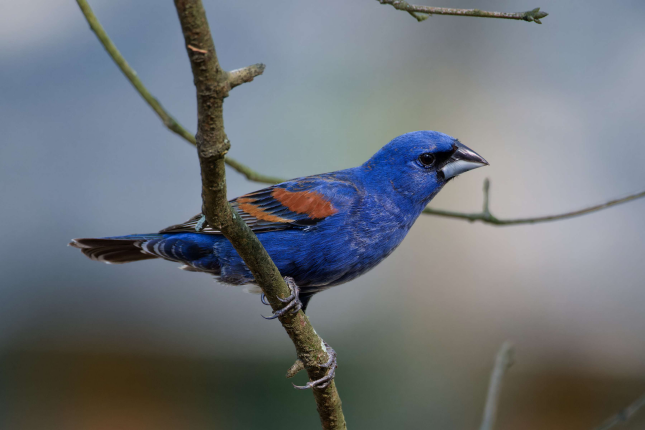
Photograph of male Blue Grosbeak. Plentiful in the Bosque this time of year.
Last month's Wings article on bird watching sparked a great response and one of our customers raised a question we could not ignore: what about playback? The posed question refers to a short paragraph about Ethics & Observing Birds where a technique to lure birds was omitted. Playback is one of the most debated topics in the birding world and one of the most misused tools in the field. The goal of this article is to offer perspective and consider if playback can be used respectfully or at all.
The P Word: Playback
Imagine yourself in a crowded supermarket when someone keeps calling your name.
You pause, turn around, scan the aisle, but no one you recognize is there. Then it happens again. And again. You become distracted, frustrated, and increasingly stressed. Your family is hungry, your to-do list is a mile long, and some unseen stranger keeps pulling your attention away for no clear reason.
That is, in many ways, what playback does to a bird.
Playback is broadcasting recorded bird calls from a phone or speaker to lure a species into view and is one of the most debated practices in modern bird watching. Used sparingly and thoughtfully, it can occasionally help observers glimpse an otherwise secretive bird. Yet playback comes with real responsibility.
Repeatedly playing calls, especially during breeding season, can stress birds, disrupt nesting behavior, pull them away from territories, and leave them vulnerable to predators. In heavily birded areas, a single bird may respond to playback dozens of times in a day.
Many birding organizations, including the American Birding Association, urge restraint, and some parks and wildlife refuges prohibit playback altogether. The general rule is simple: if you do not need it, do not use it. If you choose to use playback, keep it brief, remain mindful of the season and location, and always prioritize the bird’s well-being over the sighting itself. For a pro vs con perspective see David Sibley's article, “The Proper Use of Playback in Birding.”
Pishing & Mimicking Bird Calls
Closely related to playback is the practice known as “pishing," making sounds such as squeaks, pishing noises, whistles, or imitations of distress calls to draw birds closer. Sometimes it works remarkably well, but just because a bird responds does not necessarily mean the interaction is harmless. Birds often investigate these sounds because they interpret them as potential danger, competition, or an opportunity requiring immediate attention. A curious wren darting closer may seem playful and harmless, but from the bird’s perspective, it may be responding to a perceived threat or urgent cue.
Mimicking owl calls is another common example. Small songbirds frequently mob owls to drive away predators. When bird watchers imitate owl calls to attract activity, they may unintentionally trigger stress responses across an entire area, disrupting feeding and resting behavior for multiple species at once.
Like playback, pishing and mimicry exist in an area where moderation and context matter. A brief pish on a quiet trail is different from repeated aggressive calling around nesting birds or heavily trafficked hotspots. During migration and breeding season especially, birds are already operating on limited energy reserves. Every unnecessary response costs them time and energy they work to replace.Ethical bird watching promotes a thinking pause before using provoking techniques.
Choosing Respect
At the end of the day, every decision we make in the field is a small vote for the kind of birding community we want to be part of.
Do we flush the bird for a better photo, or do we hold back and let the moment unfold naturally? Do we play the call one more time, or trust our patience and field skills instead? Do we speak up when something feels wrong, or quietly look the other way? Birds cannot advocate for themselves. Their nests, territories, migration routes, and resting places exist at the mercy of the choices we make.That is not a burden so much as it is an invitation: to show up with humility, tread lightly, and to remember that the best nature experiences are the ones that simply occur.
For more details on the American Birding Association’s Code of Birding Ethics go here.
New bird watchers may not be aware that broadcasting recorded bird calls is an option to view hard-to-see birds. My goal here was to focus on the broader principles of ethical observation rather than introduce a technique that, if used carelessly, can impact birds. In many ways, the best introduction to playback is not learning how to use it, but understanding why so many birders choose not to.
Nature Opportunities
From nesting songbirds to busy hummingbirds and soaring raptors, our state is alive with activity. Here are two events happening to get you out and exploring nature in June.
June 13 All About Woodpeckers | Walk & Talk with WBU EastJoin Josiah Lavender for an outing at 8am followed by an in-store talk at 11am. Registration is required for the walk. Click here to learn more about the event and to register for the walk.
Birds & Monarch Butterflies of Central Mexico | January 23 – 30, 2027
We are thrilled to partner with Reefs to Rockies for an extraordinary adventure to central Mexico! Witness millions of Monarchs filling the cloud forests, enjoy world-class birding from Mexico City to the pristine forests of Valle de Bravo, and immerse yourself in the wildlife, culture, and history of one of the most beautiful corners of the world. 🦋 Learn more & register here.
We hope you enjoy our offerings. Thank you for shopping local and caring about birds.
PD StClair, Team Member at WBU Albuquerque Eastside & WBU Santa Fe