
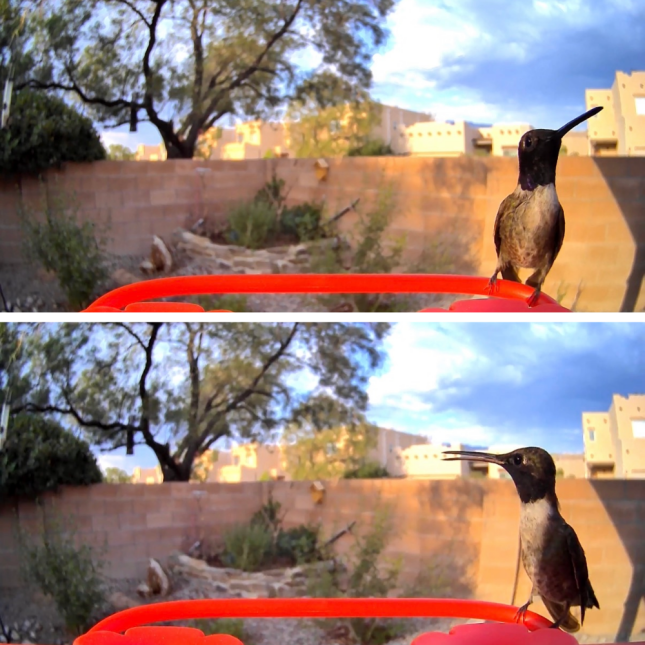
Photographs of a Black-chinned Hummingbird using a Birdfy Hummingbird Feeder
July Wings
Technology and Birdwatching
Birdwatching is a wonderful way to slow down, observe nature and appreciate the birds around us. These fundamental truths haven't changed even if today's technology transforms the way we experience the hobby. From identifying birds by their songs and calls to capturing stunning photographs and contributing to scientific research, modern tools are making birdwatching more enjoyable, educational, and accessible than ever before.
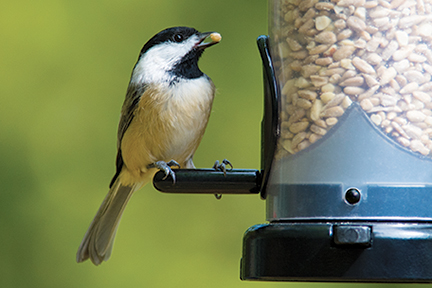
One of the biggest advances with observing birds is the availability of smartphone apps that identify birds by sight and sound. Instead of carrying a field guide, we can simply photograph a bird (or record its song) to receive identification suggestions within seconds. These tools help beginners build confidence while allowing experienced birders to verify challenging species. Technology has also enhanced birdwatching right in our own backyard. Smart bird feeders equipped with cameras can automatically photograph visiting birds and suggest species identification. These feeders provide a fascinating glimpse into the daily lives of backyard birds while allowing us to enjoy wildlife from the comfort of home. Birding apps make it easy to record sightings, track life lists, and discover recent bird reports from nearby locations. Whether you're searching for a rare visitor or monitoring seasonal migration, these tools help connect birders with one another and make every outing more rewarding.
Perhaps the greatest contribution of technology is its role in citizen science. Each time you submit a checklist through eBird or identify a bird using Merlin Bird ID, you're contributing to one of the world's largest bird conservation projects. Developed by the Cornell Lab of Ornithology, these platforms allow millions of birdwatchers to share observations that help scientists track migration patterns, monitor bird populations, identify important habitats, and better understand the effects of climate change. Even observations of common backyard birds provide valuable information that helps researchers detect long-term changes in bird populations.
Modern optics have remarkable levels of performance. Today's binoculars and spotting scopes feature brighter images, improved lens coatings, wider fields of view, and lighter designs, making it easier to observe birds at greater distances and in challenging lighting conditions. At Wild Birds Unlimited East, we offer optics for every budget and would be happy to help you find the perfect set up for your birding adventures.
Along with improved binoculars, photography has become more accessible as well. Our smartphones give us instant results and are improving each year. Digiscoping and smartphone adapters help observers capture impressive images through binoculars and spotting scopes, while today's mirrorless cameras feature advanced autofocus systems that make photographing birds in flight easier than ever before. Digiscoping is simply taking photographs or recording videos of birds by attaching your smartphone (or camera) to the eyepiece of a spotting scope or binoculars.
Technology hasn't replaced the joy of birdwatching, it has simply expanded the experience. It helps us identify birds more confidently, capture memorable moments, connect with fellow birders, and contribute meaningful data supporting bird conservation around the world. How cool is that!
We hope you enjoy our offerings. Thank you for shopping local and caring about the birds.
PD StClair, Team Member at WBU East & WBU Santa Fe